
Brooklyn, NY
Demolition Contractor in Brooklyn
Breakara Demolition works across Brooklyn. Interior strip-outs, whole structures, concrete breakout, and clearing the material that comes out of all of it.
- Serving Brooklyn
- We ask about the building
- Debris cleared
Tell us what you need taken out
Call and describe the building. We will tell you what the job involves.
The size of job Breakara takes
One wall or one building
We take single-wall jobs and we take whole structures. A small job is not a job we push to the back of the list.
Residential and commercial
Row houses, two-family homes, walk-up apartments, shops under apartments, and commercial interiors.
Occupied buildings
Most Brooklyn work happens with people still living in the building. We plan the job around that from the start.
The work Breakara takes on in Brooklyn
Four things, done properly, rather than a list built to look wide.
-
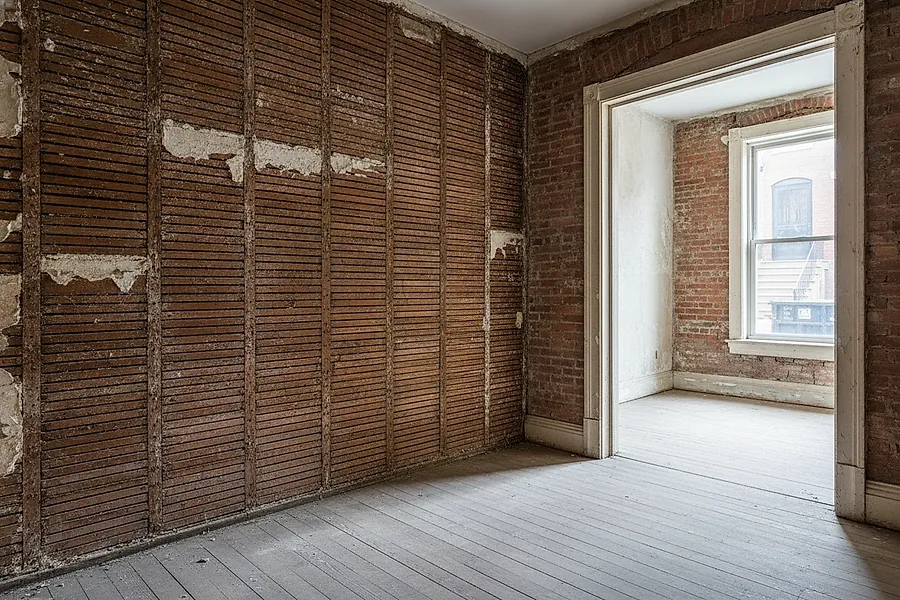
Interior Demolition
Taking the inside of a building apart without touching what holds it up. Single walls, whole apartments, whole floors.
More on interior demolition -
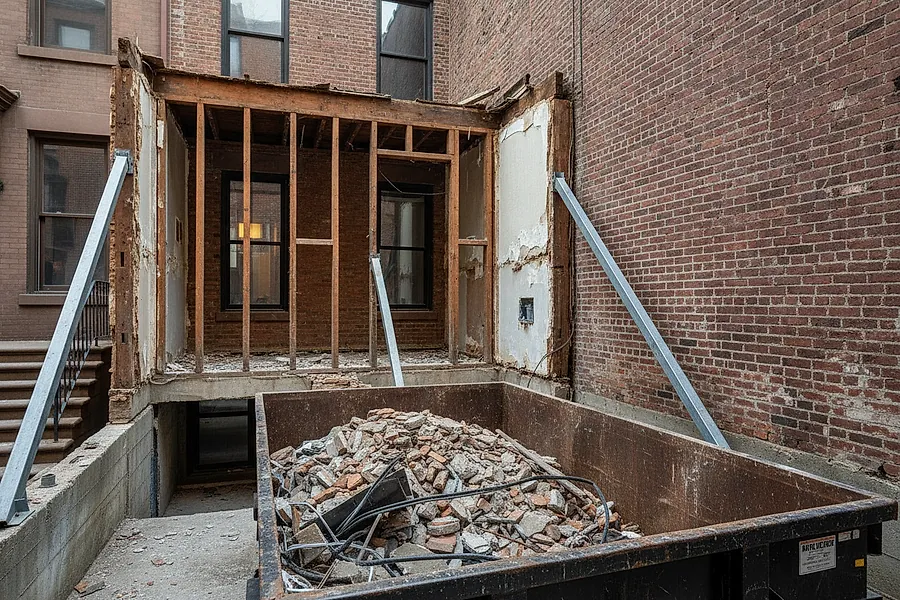
Building Demolition
Whole and partial structures on Brooklyn lots, where the buildings either side have to be left exactly as they were.
More on building demolition -
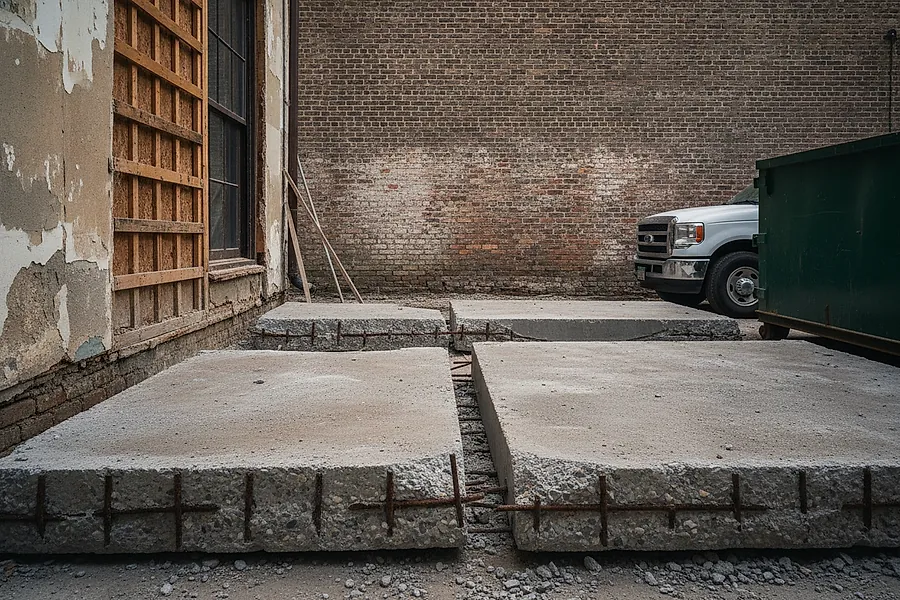
Concrete Removal
Breaking out and carrying away slabs, yards, walkways, steps and footings, including the ones with no vehicle access.
More on concrete removal -
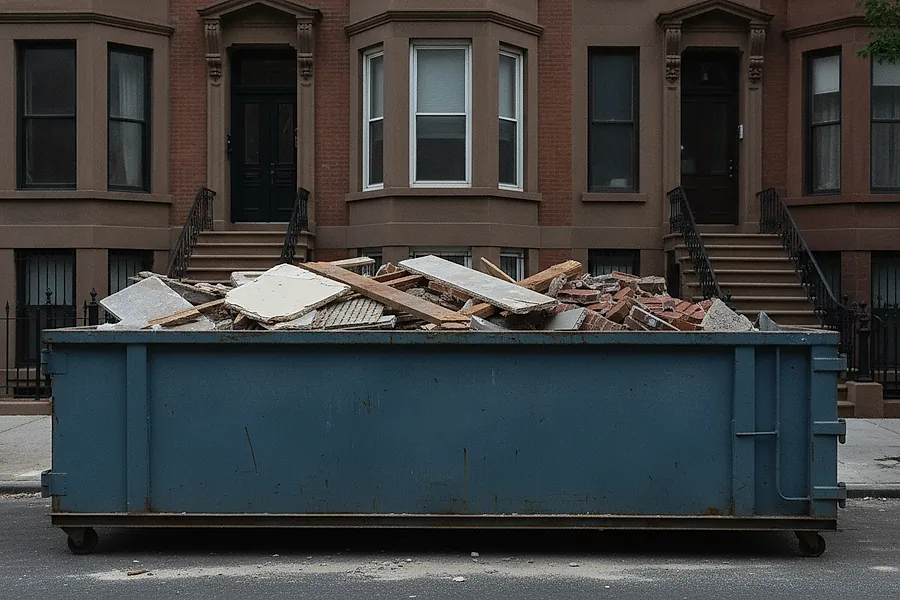
Debris Removal
Clearing what the work produces, from a building where everything has to come down the stairs and out the front door.
More on debris removal
What we deal with in Brooklyn
These are the conditions that decide how a job here actually runs.
52%
of Brooklyn predates 1930
Which means lath and plaster behind the paint, not drywall. It comes out heavier and dirtier, and it is the usual reason a job turns out bigger than it sounded on the phone.
68%
of lots are 25 feet wide or less
No side yard and no rear access on most of them. Material leaves through the front door, down the stoop and across the sidewalk.
63,000
walk-up apartment buildings
No elevator. Everything that comes out of the building is carried down the stairs by hand.
42
historic districts
If your block is landmarked, what can be done to the front of the building is governed separately. Worth establishing before anything is planned.
Why we ask about the building before the price
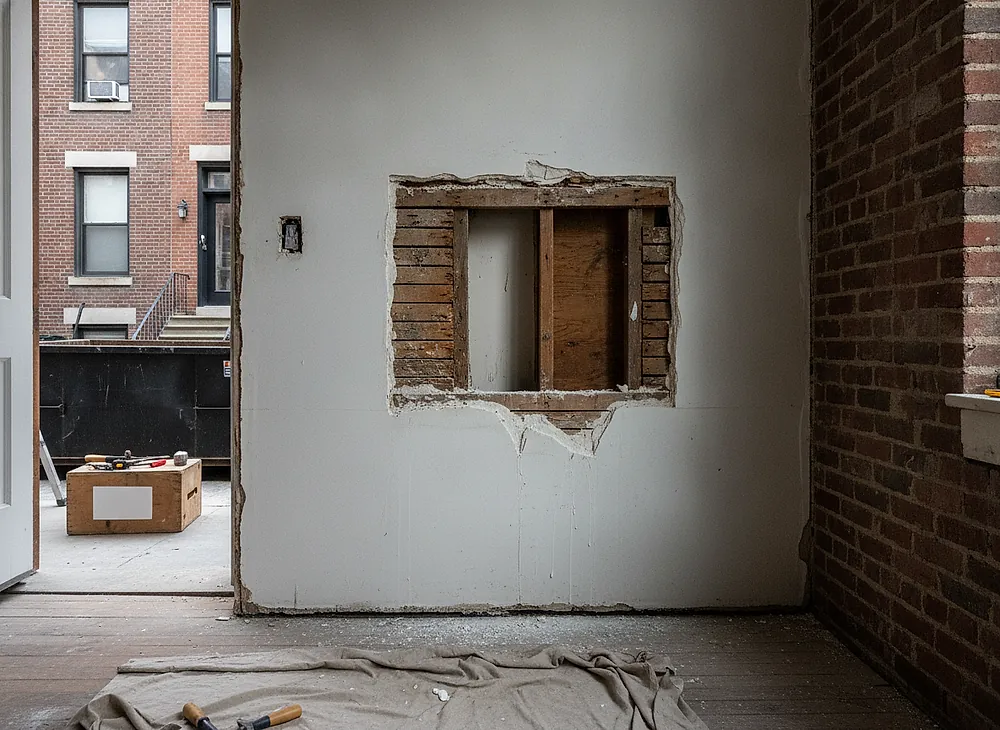
Two rooms the same size can be two completely different jobs. One is drywall on a stud wall on the second floor of a building with a service elevator. The other is lath and plaster in a fourth-floor walk-up with a shared stair.
The second one produces roughly three times the weight and every pound of it goes down four flights on someone's shoulder.
That is why we ask what the building is, what floor you are on and how things get out before we say anything about what it costs. If you want the full picture first, here is what decides the cost of an interior job in Brooklyn.
How a job runs
-
1
You tell us the building
What is coming out, what floor it is on, how old the building is and how material can leave it. A few photographs help more than anything.
-
2
We look at it
We check what is structural and what is not, what is behind the surfaces, and what the route out actually is.
-
3
We protect what stays
Floors, stairs, the hallway, the shared entrance and anything on the other side of a party wall. This is most of the preparation on a Brooklyn job.
-
4
We take it out and clear it
The work and the clearing are one job. We do not leave a pile in your hallway for somebody else to deal with.
Where Breakara works
We work across Brooklyn and everywhere else in the city listed below.
Not only Brooklyn. Breakara Demolition covers all five New York City boroughs.
Questions we get asked
Can I get a price over the phone?
We can tell you what a job like yours involves and what will move the number, and often that is enough to know whether to go further.
A figure we would stand behind needs the building. Two jobs that sound identical on the phone can differ by a factor of three once we know the wall is plaster and the apartment is on the fourth floor of a walk-up.
What decides what it costs?
How much material there is, what it is made of, what floor it starts on, how far it has to be carried, and what has to be protected on the way out.
Weight matters more than area. Plaster and concrete are the two that surprise people.
Can I stay in the building while you work?
Usually yes, and in Brooklyn it is the normal case rather than the exception. Two-family houses are the most common building type in the borough, so there is often someone upstairs.
We seal the work area, protect the route in and out, and keep the shared parts of the building usable.
What happens to my neighbours?
On an attached building you share a party wall, so we treat the far side of it as something to protect rather than something that is not our problem.
We tell you what will be noisy and roughly when, so you can tell them before it starts rather than after.
How does the material actually get out?
On most Brooklyn lots there is no side access, so it comes out the way you came in. Down the stairs, through the front door, across the sidewalk and into a container at the kerb.
That route is the job. We work out how it will run before we start, because it decides the sequence and how long the work takes.
Do you take small jobs?
Yes. A single wall, one bathroom, one room. Small work is scheduled and priced like any other job.
Talk to us about your building
Tell us what is coming out and what the building is. We will tell you what is involved.